Selecting Safe Baby Products: A Science-Backed Guide
Disclosure: As an Amazon Associate, I earn from qualifying purchases. This post may contain affiliate links for Amazon.in, meaning I may receive a small commission at no extra cost to you.
Why Baby Product Safety Needs Attention in India
In many Indian households, baby product safety is often assumed rather than carefully checked. Parents trust labels that say “gentle” or “baby-safe” without always verifying what those claims mean.
However, studies published by Indian research bodies and global health databases show that some baby lotions, soaps, and feeding products sold locally may contain harsh preservatives, synthetic fragrances, or microplastics. These ingredients are not always obvious unless labels are read closely.
India’s tropical climate adds another layer of concern. Heat and humidity can increase skin absorption, especially in babies whose skin barrier is still developing. This makes it even more important to choose safe, certified products that suit Indian conditions.
Selecting safe baby products is not about fear. It is about informed and mindful choices that support long-term health and comfort.
Understanding Indian Regulations on Baby Products
India has a strong regulatory framework for baby product safety. Knowing which authority governs which category helps parents shop with confidence.
Key Regulatory Bodies in India
- Bureau of Indian Standards (BIS) regulates toys, feeding bottles, and many baby care items
- Central Drugs Standard Control Organization (CDSCO) monitors medicinal and cosmetic baby products
- Food Safety and Standards Authority of India (FSSAI) governs baby food, cereals, and infant formula
- AYUSH regulates Ayurvedic and herbal baby oils and skincare products
When shopping, always look for:
- ISI mark on toys and feeding bottles
- FSSAI license number on baby foods
- ECOCERT India or Made Safe certification on organic products
These marks indicate that basic safety checks have been completed.
Key Indian Certifications for Baby Products
| Certification | Issued By | What It Indicates |
|---|---|---|
| ISI Mark | BIS | Meets Indian safety standards |
| FSSAI License | FSSAI | Food hygiene and safety verified |
| ECOCERT India | ECOCERT | Certified organic ingredients |
| Made Safe India | Independent body | Non-toxic and cruelty-free |
Checking for these certifications helps reduce the risk of exposure to unsafe materials.
Factors to Consider When Choosing Baby Products in India
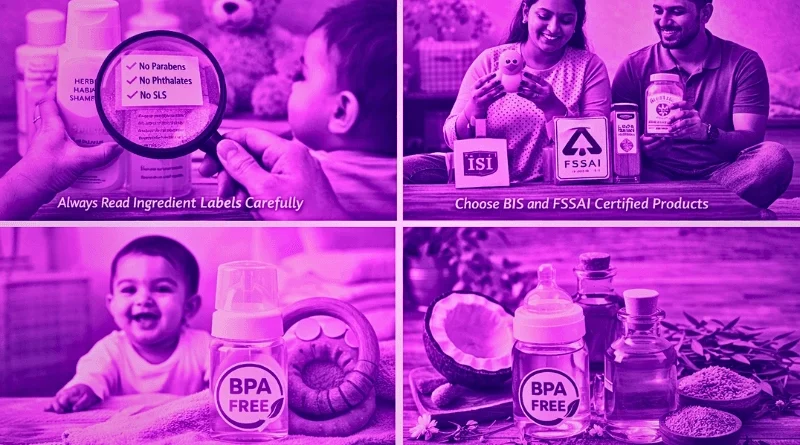
1. Read Ingredient Labels Carefully
Ingredient transparency matters. Avoid products that list:
- Parabens
- Sulfates such as SLS or SLES
- Formaldehyde-releasing preservatives
- Artificial colors
Products that clearly list ingredients show greater accountability. Simple ingredient lists are often safer for daily use.
2. Choose BIS and FSSAI Certified Products
For feeding bottles, utensils, and toys, the ISI mark is essential. For baby foods and cereals, always check the FSSAI license number printed on the packaging.
These certifications confirm that the product meets minimum Indian safety standards.
3. Prefer Fragrance-Free and Dye-Free Options
In warm and humid weather, synthetic fragrances can irritate sensitive baby skin. Rashes and redness are common reactions.
If fragrance is present, it should come from mild natural sources such as chamomile or lavender. Fragrance-free options are usually the safest choice for daily use.
4. Avoid BPA, Phthalates, and Harsh Plastics
When selecting feeding bottles, teething rings, or toys, ensure they are labeled BPA-free and phthalate-free.
Safer materials include:
- Glass
- Stainless steel
- Medical-grade silicone
- Natural rubber
Avoid unbranded plastic items, especially those without certification marks.
Common Categories of Baby Products and What to Look For
Baby Skincare and Bath Products
Choose gentle cleansers and moisturizers that are:
- pH-balanced, ideally around 5.5
- Free from artificial colors
- Dermatologically tested
Over-cleansing can dry out baby skin. Simple routines work best.
Feeding Bottles, Nipples, and Utensils
Glass and stainless steel bottles are durable and easy to clean. If plastic is used, confirm it is BPA-free and ISI certified.
Replace nipples regularly, especially once teething begins.
Diapers, Wipes, and Cloth Nappies
Look for wipes that are:
- Alcohol-free
- Fragrance-free
- Dermatologically tested
For cloth nappies, cotton fabric washed with mild detergent is a safe and reusable option.
Toys and Teethers
Avoid cheap, unbranded toys. Choose items that are:
- BIS certified
- Made from wood, silicone, or natural rubber
- Free from sharp edges and strong odors
Toys should be easy to clean and safe for mouthing.
Scientific Insights on Common Ingredients
| Ingredient | Common Use | Concern | Safer Alternative |
|---|---|---|---|
| Parabens | Creams, shampoos | Hormone disruption | Vitamin E |
| SLS or SLES | Cleansers | Skin dryness | Coco-glucoside |
| Formaldehyde | Lotions | Potential toxicity | Natural preservatives |
Indian Ayurvedic traditions often use ingredients such as neem, turmeric, and aloe vera for gentle care. These have a long history of safe topical use when formulated correctly.
How to Recognize Trustworthy Baby Brands
Reliable baby brands usually:
- Follow Indian regulations
- Display certifications clearly
- Avoid exaggerated marketing claims
Parents can verify product authenticity using:
- BIS certification databases
- FSSAI license verification portals
A little extra checking can prevent long-term issues.
DIY and Natural Baby Care Options
Homemade Baby Massage Oils
A simple blend of cold-pressed coconut oil and almond oil works well for massage. These oils are traditionally used in Indian households and support skin hydration.
Always perform a patch test before regular use.
Natural Cleaning for Toys and Feeding Items
A mild solution of warm water and baking soda can help clean toys. Sun-drying also works as a natural disinfectant in many Indian climates.
Avoid harsh chemical cleaners for baby items.
Conclusion: Building a Safe Future for Your Baby
Every product you choose becomes part of your baby’s daily environment. By reading labels, checking certifications, and keeping routines simple, you can reduce unnecessary exposure to harmful substances.
Safe baby care does not require expensive or complicated solutions. It requires awareness, patience, and thoughtful choices.
Your baby deserves comfort, protection, and a healthy start. With informed decisions, you can confidently provide all three.