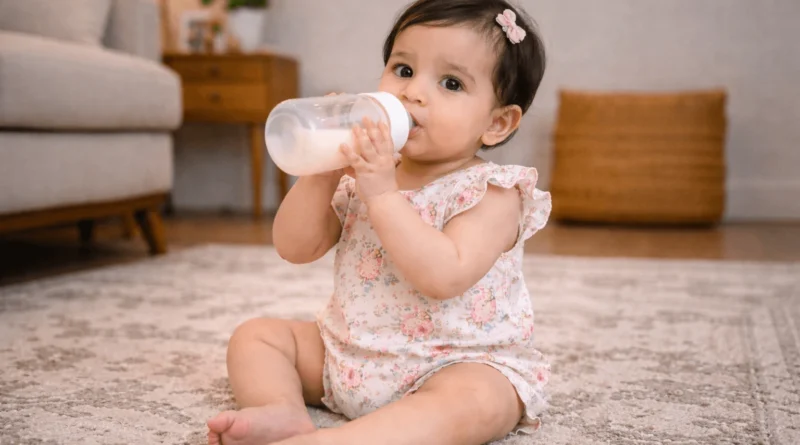
Choosing a Feeding Bottle for Baby Over 6 Months: The Transition Guide
Disclosure: As an Amazon Associate, I earn from qualifying purchases. This post may contain affiliate links for Amazon.in, meaning I may receive a small commission at no extra cost to you.
Once your baby crosses the 6-month milestone, everything changes. They are starting solids, sitting up, and perhaps even trying to hold their own bottle. While the “newborn days” were about survival and digestion, the 6–12 month stage is about independence and oral motor skills.
If you are looking for the best feeding bottle for a baby over 6 months in India, you need to look beyond just “anti-colic” features. In this guide, we explore how to upgrade your baby’s gear to match their growing appetite and developing coordination.
1. Upgrading the Nipple Flow (Level 3 & 4)
The most common mistake parents make is keeping their 7 or 8-month-old on a “Slow Flow” nipple.
- The Need for Speed: As your baby’s sucking reflex becomes stronger, a slow nipple will frustrate them. This often leads to “bottle refusal” or falling asleep before they are full.
- Signs to Upgrade: If your baby takes more than 20 minutes to finish a feed, or if they bite the nipple frequently, it is time to move to a Level 3 (6m+) or Level 4 (9m+) nipple.
- The “Y-Cut” Nipple: If you are adding thickeners or grains to the milk (as often recommended by Indian pediatricians), consider a Y-cut nipple which is designed for thicker liquids.
2. Transitioning to Self-Feeding
At 6 months, babies begin to develop the “pincer grasp.” You should look for bottles that encourage them to take control.
- Handle Attachments: Many popular brands on Amazon India (like LuvLap or Pigeon) sell removable handles. These allow your baby to hold the bottle securely while sitting in a high chair.
- Weighted Straws: For babies over 6 months, “any-angle” bottles with weighted straws are fantastic. They allow the baby to drink even if the bottle isn’t tilted perfectly.
3. Material Durability: The “Drop Test”
Toddlers are famous for throwing their bottles.
- Glass to Plastic/Steel: While glass is great for newborns, you may want to transition to high-quality BPA-free plastic (PP) or Stainless Steel for babies over 6 months.
- Stainless Steel Benefit: In the Indian climate, steel bottles are excellent because they don’t retain odors from formula or milk and are 100% shatterproof. Look for Grade 304 stainless steel for the best safety.
4. Safety Standards for Older Babies
Even as your baby gets older, safety remains the priority. In India, always look for:
- ISI Mark (IS 14625): Ensure the bottle is certified by the Bureau of Indian Standards.
- Bite-Resistant Silicone: Teeth start appearing around 6 months. Ensure the nipples are made of “medical grade” silicone that won’t tear easily, as loose pieces can be a choking hazard.
5. Introducing the “Sippy Cup” Concept
Pediatricians and the AAP recommend introducing a cup around 6 months to prepare for weaning by age one.
- Trainer Bottles: Look for “3-in-1” or “Grow-with-me” bottles. These start as a standard bottle, then add handles, and finally swap the nipple for a soft silicone spout.
- Why it matters: Using a spout instead of a nipple helps your baby learn a different swallowing pattern, which is vital for long-term dental health.
Comparison: 0–6 Months vs. 6–12 Months
| Feature | 0–6 Months (Infant) | 6–12 Months |
| Nipple Flow | Level 1 or 2 (Slow) | Level 3 or 4 (Fast) |
| Capacity | 120ml – 150ml | 240ml – 330ml |
| Focus | Anti-Colic / Digestion | Independence / Motor Skills |
| Accessories | None needed | Handles / Straws / Spouts |
Final Thoughts
Choosing a feeding bottle for a baby over 6 months is your first step toward weaning. Focus on durability and flow rate to keep your growing baby happy and satisfied.
Pro-Tip for Indian Parents: Always check the nipple for wear and tear once your baby gets their first tooth. Replace any nipple that shows even a tiny crack to ensure safety.